Traveling internationally with prescription medications can be stressful. Many common medications are controlled substances in different countries. Understanding the rules helps you avoid serious legal problems. This guide provides essential information for safe international travel with your medications.
Understanding Controlled Substances
Controlled substances are drugs regulated by governments because they can be addictive or misused. These include many prescription medications you might take daily. Pain relievers, ADHD medications, and anxiety treatments often fall into this category.
Different countries have different rules about these medications. What is legal in your home country might be banned elsewhere. Therefore, research is essential before any international trip. The consequences of breaking these laws can be severe, including arrest and imprisonment.
Check Your Destination Country’s Regulations
Your first step is researching your destination country’s medication laws. Start by visiting the embassy or consulate website of the country you plan to visit. These official sources provide accurate information about medication restrictions.
Additionally, contact the embassy directly if you cannot find clear information online. Embassy staff can answer specific questions about your medications. They can also explain what documentation you need to bring your prescriptions legally.
Some countries completely ban certain medications that are legal elsewhere. For example, many Middle Eastern countries strictly prohibit common ADHD medications. Similarly, Japan has strict rules about pseudoephedrine, found in many cold medicines. Consequently, planning ahead prevents problems at customs.
Obtain Proper Documentation
Proper documentation is crucial when traveling with controlled substances. First, get a letter from your prescribing doctor. This letter should include your name, the medication name, dosage, and reason for taking it. The doctor should also state that the medication is medically necessary for you.
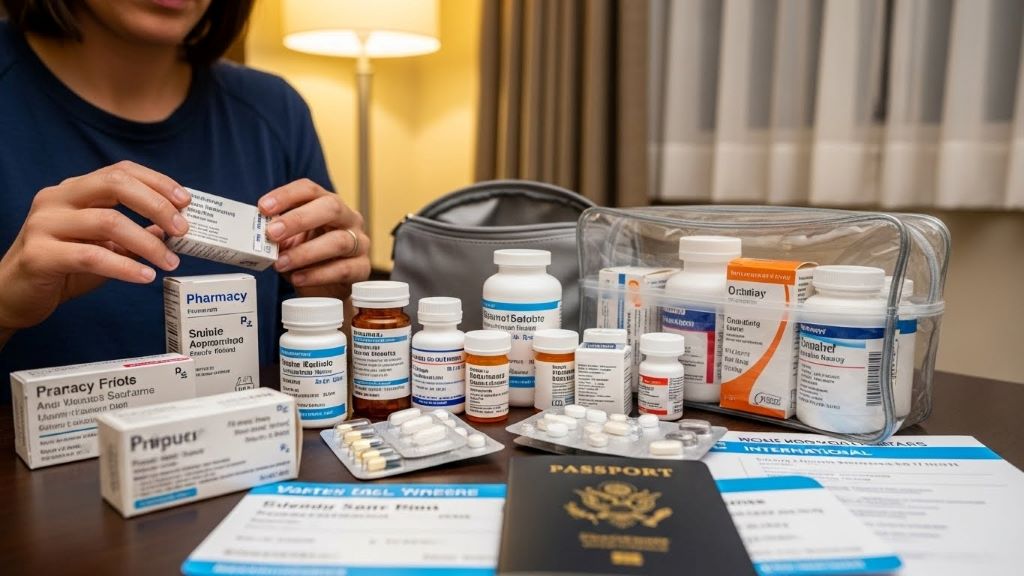
Furthermore, carry your prescription in its original pharmacy container. The label should clearly show your name, doctor’s information, and pharmacy details. Never transfer medications to unmarked containers or pill organizers for international travel.
Some countries require additional permits or licenses for controlled substances. The U.S. State Department provides country-specific information about medication requirements. Check these requirements several weeks before your trip, as obtaining permits can take time.
Pack Medications in Carry-On Luggage
Always pack your medications in your carry-on bag, not checked luggage. This ensures you have access to them throughout your journey. Moreover, checked bags can be lost or delayed, leaving you without essential medications.
Keep all medications together in one clear bag for easy inspection. Include copies of your prescriptions and doctor’s letter with your medications. Having everything organized makes airport security screening smoother and faster.
However, check liquid medication rules with your airline. Most countries allow larger quantities of liquid medications than regular liquids. Nevertheless, you may need to declare them at security checkpoints.
Bring Only What You Need
Only pack the amount of medication you need for your trip, plus a few extra days’ supply. Bringing excessive quantities raises red flags with customs officials. They may suspect you plan to sell or distribute the medications.
Calculate your daily dosage and trip length carefully. For instance, if you take medication twice daily for a two-week trip, bring 30 doses plus a small buffer. This amount is reasonable and defensible if questioned.
Additionally, consider your return journey when calculating quantities. Flight delays or itinerary changes might extend your trip unexpectedly. Therefore, bringing three to five extra days’ worth is prudent without appearing excessive.
Declare Your Medications at Customs
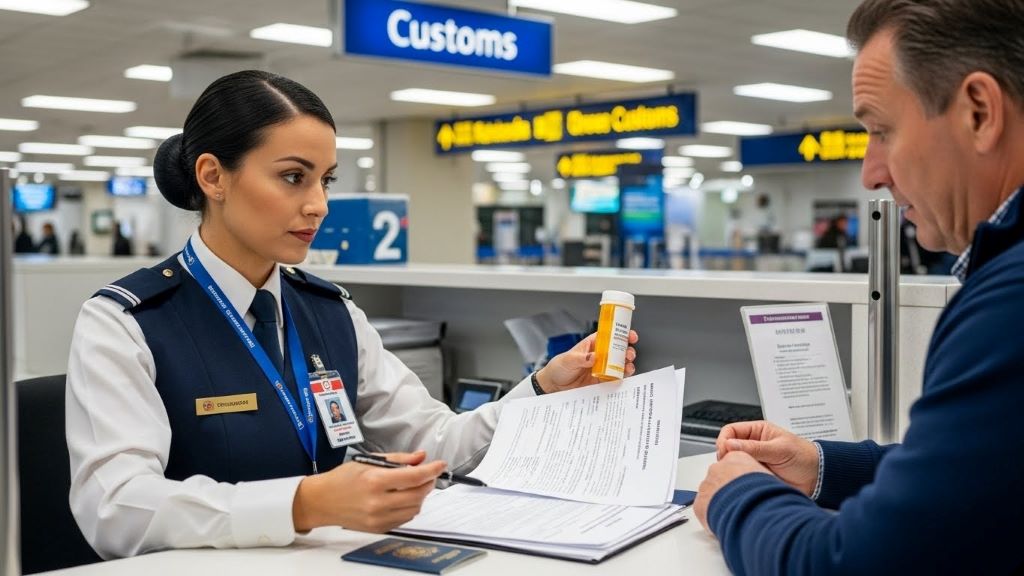
Always declare your medications when entering a foreign country. Honesty is your best protection against legal problems. Customs officers appreciate transparency and cooperation.
Use the customs declaration form to note you are carrying prescription medications. When asked, present your documentation promptly and politely. Answer questions directly and avoid volunteering unnecessary information.
Most customs officers understand that travelers need their medications. They simply want to verify everything is legal and properly documented. Consequently, being prepared with proper paperwork makes this process quick and painless.
Understand Country-Specific Restrictions
Some regions have particularly strict medication laws. The United Arab Emirates, Singapore, and Japan are known for rigorous enforcement. Research these destinations carefully if your medications include controlled substances.
For example, Japan requires advance permission for many common medications. You must submit an application form called a Yakkan Shoumei weeks before arrival. Without this document, customs may confiscate your medications upon entry.
Similarly, Singapore imposes severe penalties for drug violations. Even small amounts of certain controlled substances can result in harsh punishments. Therefore, double-check Singapore’s regulations through their Health Sciences Authority before traveling there.
Consider Alternative Medications
If your regular medication is banned in your destination country, ask your doctor about alternatives. Many medications have similar alternatives that might be legal where you are going. Your doctor can help you find suitable substitutes for your trip.
Start this conversation with your doctor well before your departure date. Switching medications may require adjustment time. Additionally, your doctor needs time to write new prescriptions and monitor how you respond to changes.
However, never stop taking prescribed medications without medical supervision. Work closely with your healthcare provider to ensure any changes are safe and appropriate for you.
Keep Emergency Contact Information
Carry contact information for your doctor and pharmacy while traveling. If problems arise with your medications, you can quickly reach them for help. They can fax prescriptions or provide verification if needed.
Furthermore, research healthcare facilities at your destination before you go. Know where the nearest hospital or pharmacy is located. This preparation helps if you need medical attention or replacement medications during your trip.
Travel insurance that covers medical emergencies is also wise. Some policies help with medication-related issues abroad. Therefore, review your coverage before traveling internationally.
Know Your Rights as a Traveler
Understanding your rights helps protect you during international travel. Most countries respect medical necessity when medications are properly documented. However, their laws still apply to visitors.
If customs officials detain you, remain calm and cooperative. Request to speak with a consular officer from your embassy. Embassy staff can provide assistance and ensure you are treated fairly under local laws.
Nevertheless, remember that your home country’s laws do not apply abroad. You must follow the destination country’s regulations, even if they seem unreasonable. Therefore, prevention through proper research and documentation is always better than trying to resolve problems later.
Conclusion
Traveling internationally with controlled substances requires careful planning and preparation. Research your destination country’s medication laws well in advance. Obtain proper documentation from your doctor and carry medications in their original containers. Pack medications in your carry-on luggage and declare them at customs. Understanding and following these guidelines helps ensure safe, legal travel with your necessary medications. Taking these precautions protects both your health and your freedom while exploring the world.
Frequently Asked Questions
Can I travel internationally with opioid pain medications?
Yes, but opioids are heavily regulated worldwide. You must carry a doctor’s letter, original prescription, and only pack what you need for your trip. Some countries require advance permits for opioid medications, so research your destination’s specific requirements early.
What happens if customs confiscates my medication?
If customs takes your medication, ask for documentation explaining why. Contact your embassy immediately for assistance. You may need to find a local doctor to prescribe alternative medications. This situation highlights why carrying doctor’s letters and prescriptions is so important.
Do I need special permission to travel with ADHD medications?
Many ADHD medications are controlled substances internationally. Requirements vary by country, with some requiring advance permits and others banning these medications entirely. Contact the destination country’s embassy several weeks before travel to understand specific requirements.
Can I mail my medications to my destination before I arrive?
Mailing controlled substances internationally is generally illegal and highly risky. Packages may be seized, and you could face criminal charges. Always carry medications with you in your carry-on luggage with proper documentation.
What should I do if I run out of medication while traveling?
Contact your doctor at home immediately for help. Visit a local hospital or clinic to see a physician who can prescribe more medication. Bring copies of your prescription and doctor’s letter to show local healthcare providers. This is why travel insurance with medical coverage is valuable.
Related Topics:
Why Travel Insurance for US Citizens Already Abroad Is a Must-Have
Top Tips to Save Big on Airfare: Fly Cheap with a Large Family