

Picking the right backpack for hiking sounds simple. But walk into any outdoor store, and you will quickly feel overwhelmed. There are dozens of styles, sizes, and price points. Each one promises to be the best choice for your next adventure.
The truth is, you do not need to spend a lot to get a reliable pack. With some knowledge and a clear idea of your needs, you can find excellent light hiking gear that serves you well for years. This guide walks you through every important factor, so you can shop with confidence and leave the trailhead with the right pack on your shoulders.
Why the Right Backpack Makes or Breaks a Hike
Your backpack is more than a bag. It carries your water, food, safety gear, and comfort items for the entire journey. A poor choice leaves you with sore shoulders, a tired back, and a miserable experience. A good choice, however, lets you focus entirely on the trail ahead.
Weight is the first thing to consider. Every unnecessary ounce adds up over miles of trail. A pack that weighs three pounds empty starts to feel like a burden before you even add your gear. Therefore, starting with a lightweight frame gives you a real advantage from the very first step.
Fit matters just as much as weight. A heavy pack that fits perfectly can feel better than a light one that sits wrong. Both elements working together is what transforms a long hike from a chore into a joy.
Understanding Backpack Volume and What It Means for You
Backpack size is measured in liters. This number tells you how much gear the pack can hold. Choosing the right volume for your hiking style is one of the most important decisions you will make.
For short day hikes of two to four hours, a pack between 10 and 20 liters is usually more than enough. You can fit water, snacks, a first aid kit, sunscreen, and a light jacket without any trouble. These packs are small, light, and easy to move in.
For full-day hikes lasting six to ten hours, consider a pack in the 20 to 35 liter range. This gives you space for more food, extra layers, and safety items. Additionally, if you plan to include trekking poles or a rain cover, a slightly larger pack makes packing easier.
For overnight or multi-day trips, you will need 40 liters or more. However, for most beginners and budget-focused hikers, a well-chosen pack in the 20 to 30 liter range covers the vast majority of outings beautifully.
The Essential Features Every Budget Hiking Pack Should Have
Not every affordable pack is worth buying. Some cut corners on critical features. Others simply look good but fall apart after a few uses. Here is what to check before you commit to a purchase.
A Supportive Back Panel
The back panel is the surface that presses against your spine and shoulder blades. A firm, contoured panel transfers weight more evenly across your back. A flat, flimsy panel puts pressure on a narrow strip of your spine, which becomes painful quickly.
Many budget packs use an EVA foam panel. This material is lightweight and provides decent support for day loads. It is not as advanced as aluminum-frame systems found in premium packs, but it works very well for most casual and intermediate hikers.
Padded Shoulder Straps
Thin shoulder straps dig into your shoulders under load. This is one of the fastest ways to ruin a hike. Look for straps with at least half an inch of foam padding. Additionally, straps that are slightly curved or anatomically shaped tend to stay on your shoulders better than straight ones.
Some budget packs include a sternum strap, which is a horizontal strap connecting the two shoulder straps across your chest. This small feature stabilizes the pack and keeps the shoulder straps from sliding outward. It is a valuable addition, especially on uneven terrain.
A Hip Belt for Heavier Loads
If you plan to carry more than 15 pounds, a padded hip belt is essential. It moves the majority of the load from your shoulders to your hips. Your hips are built to carry weight. Your shoulders are not. This single feature can reduce fatigue significantly on longer hikes.
However, for very light day hikes with minimal gear, a hip belt is optional. In that case, a well-fitted set of shoulder straps with a sternum strap is usually sufficient.
Durable, Lightweight Fabric
The material of the pack determines both its weight and its ability to withstand rough use. Nylon is the best choice for hiking packs. It is strong, relatively light, and resists water when treated with a durable water-repellent coating.
Polyester is a common alternative in budget packs. It is heavier than nylon but also cheaper to produce. Polyester works fine for moderate use in fair weather. However, it absorbs more water and dries more slowly, which can be a disadvantage on wet trails.
Check the denier rating if it is available. Denier measures fabric thickness and strength. A rating between 200D and 450D strikes a good balance between durability and weight for a day pack.
Smart Pocket Layout
Organization matters on a hike. You want your snacks, phone, and map accessible without digging through your main compartment. Look for a pack with a large main compartment, at least one exterior zippered pocket, and mesh side pockets for water bottles.
A dedicated hydration sleeve inside the main compartment is a bonus. It keeps your water bladder in place and often includes a small port for routing the drinking tube to your shoulder strap. Even if you prefer water bottles, this sleeve adds useful structure inside the pack.
How to Get the Right Fit Without Visiting a Store
Many hikers buy packs online today, which means you cannot try before you buy. However, getting a good fit is still very possible with a bit of preparation.
Start by measuring your torso length. This is not the same as your height. To find your torso length, locate the bony bump at the base of your neck and measure down to the top of your hip bones. Most packs list their fit range in inches or as small, medium, or large based on this measurement.
When your pack arrives, load it with around 10 pounds of gear before adjusting it. First, loosen all the straps. Then put on the pack and position it so the hip belt sits just above your hip bones. Fasten and tighten the hip belt first. Next, pull down on the shoulder strap load lifters to bring the top of the pack closer to your upper back. Finally, fasten and adjust the sternum strap.
The pack should feel snug and close to your back. There should be no excessive swaying from side to side. If the pack pulls away from your back at the top, the torso length is likely too long. Additionally, if the shoulder straps gap away from your shoulders at the top, the pack may be too short.
Always check the seller’s return policy before ordering. Test the pack on a short local walk within the return window. A real-world test reveals fit issues that no amount of indoor adjustment can replicate.
Choosing Between Daypacks and Compact Backpacks for Multi-Use
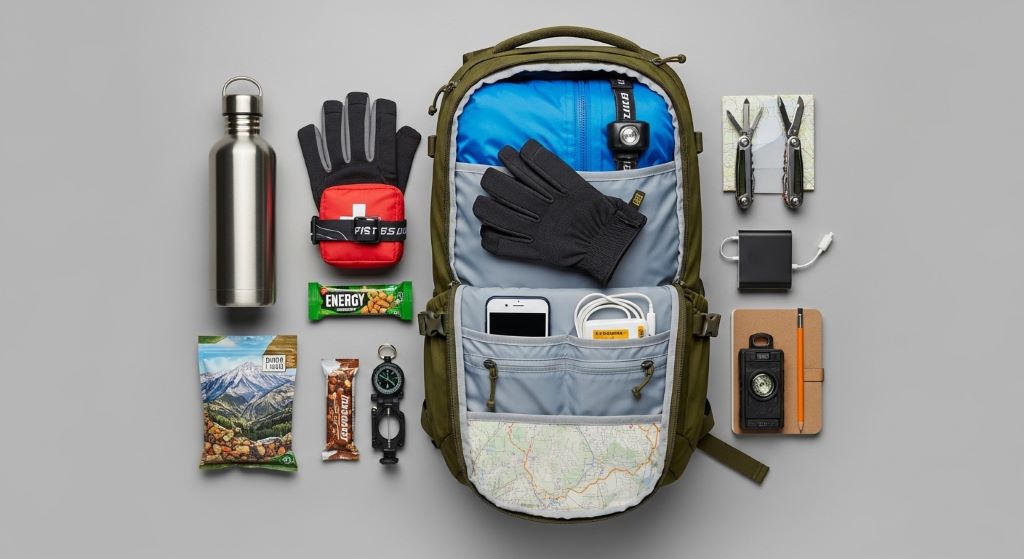
Some hikers want a single pack that works for both hiking and everyday use. This is a smart approach when you are on a budget. Fortunately, compact backpacks designed for hiking often work well for travel, commuting, and general outdoor activities too.
Look for a pack with a low-profile design that does not scream “outdoor gear” when you wear it in the city. Neutral colors like black, grey, navy, or olive tend to be more versatile than bright greens or oranges. Additionally, a clamshell opening, which unzips from the top to the bottom like a suitcase, makes accessing your gear easier in everyday settings.
However, keep in mind that a pack optimized for everyday use may sacrifice some hiking-specific features. A commuter-style pack often has fewer external attachment points, less structural support, and a simpler back panel. Therefore, if hiking is your primary use, choose a hiking-specific pack even if it also works off the trail.
Where to Shop for Quality Budget Hiking Packs
Knowing where to look is half the battle when shopping on a budget. The right retailer can save you a significant amount without compromising quality.
- Online marketplaces like Amazon carry a wide range of affordable options with large volumes of customer reviews. Filter by star rating and read reviews specifically from people who have used the pack on actual hikes, not just casual outings.
- Outdoor specialty retailers such as REI and Backcountry hold seasonal sales, particularly in spring and at the end of summer. Their house brands, like REI Co-op, offer excellent quality at prices far below premium labels.
- Direct-to-consumer outdoor brands have expanded significantly in recent years. Companies that sell only through their own websites often offer better value because they skip retail markups entirely.
- Secondhand gear shops and online platforms like eBay or Facebook Marketplace can yield excellent finds on lightly used packs from well-known brands. A gently used pack from a reliable brand often outperforms a brand-new pack from an unknown one.
- Discount sporting goods stores often stock entry-level packs from established brands at clearance prices, especially at the end of hiking season.
Additionally, do not overlook the value of older pack models. When a brand releases a new version of a popular pack, the previous version typically drops in price. The changes between model years are often cosmetic. Therefore, searching for last year’s version of a well-reviewed pack can save you 30 to 50 percent.
Warning Signs of a Poor-Quality Budget Pack
Budget shopping requires extra attention to detail. Some packs look great in photos but disappoint in person. Here are the most common warning signs to watch for.
Weak zippers are the most frequent failure point in cheap packs. YKK is the most trusted zipper brand in outdoor gear. If a pack listing mentions YKK zippers, that is a positive sign. If zippers feel gritty, stiff, or difficult to pull, avoid the pack entirely.
Thin shoulder strap foam compresses quickly under use. Straps that feel adequately padded in the store can feel paper-thin after an hour on the trail. Squeeze the strap padding before buying. It should feel dense and resilient, not soft and spongy.
Poor attachment points around the shoulder straps are another concern. The stitching where straps attach to the pack body takes enormous stress over time. Look for bar-tack stitching at these points. This is a dense, reinforced stitch visible as a tight rectangular or circular pattern. Avoid packs where the straps are simply sewn on with regular stitching.
Finally, be cautious of packs with no brand identity or no verifiable customer reviews. Unbranded packs from unknown sellers carry high risk. A pack that receives dozens of five-star reviews within a few months of listing is sometimes a sign of manipulated feedback. Look for reviews that mention specific details about real hikes and real conditions.
Caring for Your Pack to Maximize Its Lifespan
Even a modest investment deserves proper care. A well-maintained pack lasts far longer than a neglected one, saving you money over time.
- Empty and air out your pack after every hike. Food residue and moisture accelerate fabric breakdown and encourage mold growth.
- Spot-clean dirt with a soft brush and mild soap. For heavier cleaning, hand-wash in lukewarm water. Avoid machine washing unless the manufacturer explicitly allows it.
- Store your pack loosely stuffed or hanging in a dry, ventilated space. Avoid storing it compressed for long periods, as this can permanently deform the foam padding.
- Reapply a DWR waterproofing spray once per season or after several heavy rainstorms. This restores the water-beading properties of the outer fabric.
- Inspect buckles, zippers, and stitching before each hike. A small repair done early prevents a larger failure on the trail.
Therefore, a few minutes of maintenance after each use is all it takes to keep an affordable pack performing like new for many seasons.
Conclusion
Choosing a lightweight budget backpack for hiking is entirely manageable once you understand what matters. Focus on the right volume for your typical hike, prioritize a supportive back panel and padded shoulder straps, and check the fabric quality and pocket layout before you buy.
Shop strategically by timing your purchases around sales, exploring direct-to-consumer brands, and considering prior-year models. Read real reviews from real hikers, and always test the fit before committing fully.
Whether you are just starting out or looking to replace a worn-out pack, the market today offers outstanding options for every budget. With the guidance in this article, you can walk into your next purchase with clarity. The trail does not care how much you spent. It only cares that you showed up ready. Now go find the pack that gets you there.
Frequently Asked Questions
1. How light should a day hiking backpack be?
For day hikes, aim for an empty pack weight under 2 pounds. Many well-made packs in the 20 to 30 liter range weigh between 1 and 1.8 pounds. The lighter the empty pack, the more of your weight budget you can spend on the gear inside. However, do not sacrifice support and durability just to shave a few ounces.
2. What is the difference between a hiking backpack and a regular backpack?
Hiking backpacks are specifically designed to carry weight comfortably over uneven terrain for extended periods. They feature contoured back panels, load-transfer systems, hip belts, and materials suited for outdoor conditions. Regular backpacks lack these structural features and become uncomfortable far more quickly when loaded with hiking gear.
3. Do I need a waterproof backpack for hiking?
Most hiking packs are water-resistant rather than fully waterproof. They resist light rain well but will let water through in heavy downpours. The best approach is to use a pack with a DWR-treated fabric and carry a separate pack rain cover for wet conditions. Additionally, storing critical items like electronics and spare clothing in dry bags inside the pack adds extra protection.
4. How do I know if my hiking pack is too heavy?
A loaded day pack should not exceed 20 percent of your body weight for comfortable hiking. For example, a person weighing 150 pounds should carry no more than 30 pounds. If you regularly feel shoulder pain, lower back strain, or excessive fatigue during hikes, your pack is likely overloaded. Review your gear list and remove any items you have not used on recent hikes.
5. Can a budget backpack handle rough terrain and bad weather?
Yes, a well-chosen budget pack can handle most recreational hiking conditions. The key is selecting a pack with a denier rating above 200D, quality zippers, reinforced strap attachment points, and a DWR coating. Budget packs may not last as long as premium options under extreme use, but for weekend hikers and casual trail users, they perform reliably when chosen and cared for correctly.
Related Topics:
How to Protect Your Eyes with UV Protection Sunglasses for Men
How to Discover Unique Travel Destinations: Escape the Tourist Traps