

Most men think about sunscreen before heading outdoors. However, many forget that their eyes need protection too. The sun does not just burn your skin. It also damages your eyes over time. And unlike sunburn, that damage is often invisible until it becomes serious.
The good news is that the right pair of sunglasses can protect your vision for years to come. This guide explains why UV protection matters, what to look for in a quality lens, and how to choose a pair that fits your life.
Why UV Rays Are a Real Threat to Your Eyes
The sun emits ultraviolet radiation in three forms: UVA, UVB, and UVC. UVC is mostly absorbed by the atmosphere. However, UVA and UVB rays reach your eyes every single day — even when it is cloudy.
Long-term exposure to these rays has been linked to serious conditions. Cataracts are one of the most common. This is a clouding of the lens inside the eye that blurs vision over time. Macular degeneration is another. It damages the central part of your retina and can lead to permanent vision loss.
There is also a condition called photokeratitis. Think of it as a sunburn on your eye. It causes pain, redness, and temporary vision problems. It usually heals within a day or two, but repeated exposure leads to lasting damage.
Therefore, protecting your eyes is not optional. It is a long-term investment in your health.
What UV Protection Actually Means
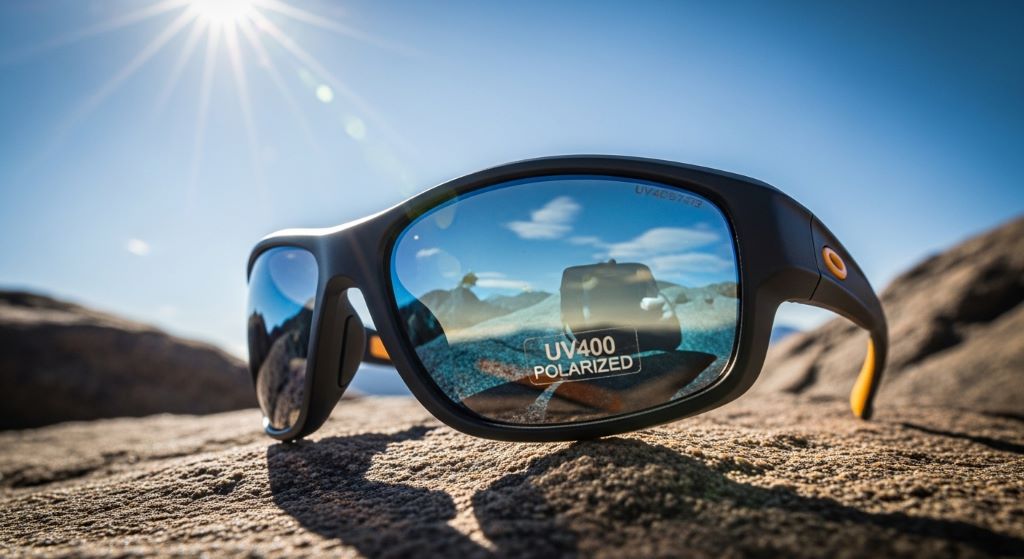
When you see “UV400” on a pair of sunglasses, that is a good sign. UV400 means the lenses block all light rays with wavelengths up to 400 nanometers. That covers both UVA and UVB rays completely.
This is the standard you should look for. Anything less leaves your eyes partially exposed. Unfortunately, dark lenses do not automatically mean better protection. A dark lens without UV coating can actually be worse than a light lens with proper protection. Here is why: dark lenses cause your pupils to dilate. If UV rays can still pass through, your eyes absorb more of them than they would in bright light.
Additionally, polarized lenses are often confused with UV protection. Polarization reduces glare from reflective surfaces like water or roads. It is a separate feature. A lens can be polarized without offering UV protection, so always check both.
The Link Between Sun Exposure and Outdoor Activities
Men who spend time outdoors face higher UV exposure than those who stay inside. Whether you are fishing, hiking, cycling, or relaxing on the beach, your eyes are taking in reflected and direct light throughout the day.
Water is one of the biggest reflectors of UV light. Sand is another. This makes coastal environments especially risky. When you are gearing up for a day at the shore, eye safety sunglasses are just as essential as sunscreen and a hat. They should be a core part of your beach sun gear, not an afterthought.
Snow also reflects a large amount of UV radiation. Skiers and snowboarders are at particularly high risk, especially at altitude where the atmosphere is thinner and filters less UV light.
How to Read Lens Labels and Know What You Are Buying
Shopping for sunglasses can feel overwhelming. There are dozens of brands, lens types, and price points. Breaking it down into a few key categories makes the choice easier.
UV Protection Rating
Always look for UV400 or “100% UV protection” on the label. If the packaging does not mention UV protection at all, put them back. Cheap sunglasses without UV coating offer almost no real protection despite their dark appearance.
Lens Color and Light Transmission
Lens color affects how you see the world around you, but it does not determine UV protection on its own. Gray lenses reduce brightness without distorting colors. Brown and amber lenses enhance contrast, which is useful for driving or fishing. Yellow and orange lenses work well in low-light conditions. Green lenses offer a good balance between contrast and color accuracy.
Choose a color based on what you do most, not just how it looks.
Lens Material
Polycarbonate lenses are lightweight, impact-resistant, and naturally block UV rays. They are a great choice for active men. Glass lenses offer superior optical clarity but are heavier and can shatter. CR-39 plastic lenses are common in mid-range sunglasses and offer decent optical quality at a lower price. Trivex lenses combine the lightness of polycarbonate with the clarity of glass, though they tend to cost more.
Frame Fit and Coverage: Why Size Matters
A lens rating alone is not enough. The frame shape and size also play a role in how much UV exposure your eyes receive.
Wraparound frames provide the most coverage. They block light from entering at the sides, which is where a lot of UV sneaks through with standard styles. If you spend long hours outdoors, wraparound or sport-style frames are worth the investment.
Additionally, larger lenses protect the skin around your eyes. The eyelid area is surprisingly vulnerable to UV damage. Skin cancer on the eyelid accounts for a notable percentage of all eye-area cancers. A pair of oversized or wide-lens sunglasses helps cover that delicate tissue.
Fit also affects comfort and consistency. Sunglasses that slip down your nose or pinch your temples will not stay in place. If they keep falling off, you will end up taking them off. Proper fit means they stay on comfortably throughout the day.
Polarization: When It Helps and When It Doesn’t
Polarized lenses cut glare by filtering horizontally reflected light. This is a major benefit when you are near water, on snow, or driving on a wet road. The visual difference is immediate and noticeable.
However, polarization comes with a few trade-offs. Some LCD screens — like GPS devices, phones, or car dashboards — appear dark or washed out when viewed through polarized lenses. Additionally, they may not be ideal for flying. Pilots typically avoid polarized lenses because certain cockpit instruments rely on reflected light to display information correctly.
For most men, especially those who enjoy outdoor sports or time near the water, polarization is a worthwhile upgrade. Just know what it does and does not do.
Photochromic Lenses: Convenience with a Catch
Photochromic lenses, often sold under brand names like Transitions, darken automatically in bright light and clear up indoors. They are convenient because you only need one pair for both indoor and outdoor use.
However, they come with limitations. Most photochromic lenses do not darken well inside cars because the windshield blocks the UV light that triggers the darkening effect. They also take time to adjust when you move between environments. In very hot weather, they tend to darken less, which can be a problem on a sunny summer afternoon.
Despite these limitations, photochromic lenses are a practical choice for men who move frequently between indoor and outdoor settings throughout the day.
Sunglasses for Specific Activities
Different activities demand different levels of performance from your eyewear. Here is a breakdown of what works best in common scenarios.
Water Sports and Beach Days
When you are near the ocean or lake, glare from the water surface is the biggest challenge. Polarized lenses with UV400 protection are the best choice here. Wraparound frames prevent both glare and spray from reaching your eyes. As part of your beach sun gear, look for frames with rubber grip inserts that keep them in place when you sweat or get wet. Eye safety sunglasses with floating hinges are also available for water sports, so they do not sink if they fall off.
Running and Cycling
Speed and airflow make lightweight frames essential. Wraparound sport designs reduce wind exposure to the eyes. Photochromic or interchangeable lenses work well here since light conditions change quickly during outdoor exercise.
Driving
Glare from oncoming headlights or sun reflecting off wet roads is a daily challenge. Polarized lenses are excellent for driving during daylight hours. However, as mentioned earlier, be mindful of dashboard screens with polarized lenses and adjust your angle if needed.
Golf and Outdoor Sports
Brown and amber lenses improve contrast against grass and blue sky, making it easier to track a ball in flight. This is why these tints are popular in golf and tennis circles.
How to Care for Your Sunglasses
Even the best lenses lose their protective coating if they are not maintained properly. A few simple habits will extend the life of your sunglasses significantly.
Always store them in a hard case when not in use. Soft pouches offer minimal protection against scratches and impacts. Clean lenses with a microfiber cloth, not a paper towel or shirt. Paper products contain wood fibers that can scratch coatings over time. Use lens cleaning solution or plain water rather than household cleaners, which can strip coatings.
Additionally, avoid leaving sunglasses in a hot car. Extreme heat warps frames and degrades lens coatings faster than normal use.
Budget vs. Premium: What Does Price Actually Get You?
You do not have to spend a fortune to get good UV protection. A $20 pair with a genuine UV400 rating protects your eyes just as well as a $300 designer pair in terms of UV blocking.
However, higher prices generally buy you better optics, more durable materials, more comfortable fits, and better-looking frames. If you wear sunglasses daily or use them during intense activity, spending more makes sense. The lens distortion in cheap sunglasses can cause eye strain over time, even if the UV protection is technically adequate.
Therefore, set a realistic budget based on how often and how intensely you use your sunglasses. For occasional weekend use, a mid-range pair works well. For daily or sport use, investing in quality optics pays off.
Red Flags to Avoid When Shopping
Not all sunglasses are created equal. Watch out for these warning signs.
- No UV protection rating listed anywhere on the product or packaging
- Extremely dark lenses with no certification
- Poor lens quality with visible distortion when you look through them
- Frames that flex excessively or feel flimsy at the hinges
- Lenses that pop out of frames easily
If a deal seems too good to be true, it usually is. Unbranded sunglasses sold at very low prices rarely meet any optical standard.
Conclusion
Protecting your eyes from the sun is one of the simplest and most effective things you can do for your long-term health. UV damage builds up silently over years, but the consequences — cataracts, macular degeneration, and photokeratitis — are very real.
Start by choosing lenses with UV400 certification. Consider polarization if you spend time near water or on the road. Pick a frame shape that offers full coverage and stays on comfortably during your activities. And take care of your sunglasses so they last.
Whether you are picking out beach sun gear for a summer trip or looking for everyday eye safety sunglasses that stand up to daily wear, the right pair is out there. Invest in quality, wear them consistently, and your eyes will thank you for it.
Frequently Asked Questions
What does UV400 mean on sunglasses?
UV400 means the lenses block all ultraviolet light with wavelengths up to 400 nanometers. This includes both UVA and UVB rays, offering complete UV protection for your eyes.
Are polarized sunglasses the same as UV protection sunglasses?
No. Polarization reduces glare from reflective surfaces, while UV protection blocks harmful ultraviolet rays. A good pair should ideally offer both, but they are separate features.
Can cheap sunglasses still protect my eyes from UV rays?
Yes, if they carry a genuine UV400 certification. However, cheap sunglasses often have lower optical quality, which can cause eye strain. They may also lack durable coatings and comfortable fits.
How often should I replace my sunglasses?
Most quality sunglasses last several years with proper care. Replace them sooner if the lenses become scratched, the coating starts to peel, or the frames no longer fit properly.
Do I need sunglasses on cloudy days?
Yes. Clouds block visible light but do not fully filter UV rays. Up to 80 percent of UV radiation can pass through overcast skies, so wearing sunglasses outdoors remains important even when the sun is hidden.
Related Topics:
Best Time to Visit Maui: Ideal Seasons for Weather, Activities And Deal
What Is The Most Popular Method To Travel Over Spring Break?