

Overtourism plagues many iconic destinations, diminishing experiences and harming environments. Travelers increasingly seek pristine locations offering natural beauty without overwhelming crowds. These hidden gems provide authentic experiences while preserving local cultures and ecosystems.
Discovering low-tourism destinations requires looking beyond popular travel guides and social media hotspots. This guide reveals stunning natural landscapes where travelers can explore peacefully while supporting sustainable tourism development.
Why Choose Low-Tourism Destinations
Uncrowded destinations offer more authentic cultural interactions with local communities. Travelers experience genuine hospitality rather than commercialized tourism interactions. Additionally, fewer visitors mean lower prices for accommodations, meals, and activities.
Environmental preservation benefits significantly from controlled tourism numbers. Ecosystems remain healthier when visitor impacts stay manageable. Therefore, choosing lesser-known destinations supports conservation efforts while providing memorable experiences.
Photography opportunities improve dramatically without crowds blocking views or appearing in shots. Travelers can take their time composing images without pressure from waiting tourists. Moreover, peaceful settings enhance relaxation and connection with nature.
Local economies benefit more directly from tourism dollars in less-visited areas. Money spent reaches small businesses and families rather than large international chains. However, travelers should still practice responsible tourism regardless of destination popularity.
Faroe Islands: Nordic Beauty Without Iceland’s Crowds
The Faroe Islands sit between Iceland and Norway in the North Atlantic Ocean. These 18 volcanic islands feature dramatic cliffs, cascading waterfalls, and vibrant green hillsides. Sheep outnumber the 50,000 human residents significantly.
Mulafossur Waterfall on Vagar Island plunges directly into the ocean from towering cliffs. This iconic scene requires minimal hiking to reach. Additionally, the village of Gasadalur provides traditional Faroese architecture against spectacular backdrops.
Saksun village nestles in a dramatic valley ending at a tidal lagoon. Turf-roofed houses dot the landscape, creating postcard-perfect scenes. The hiking trail from Tjornuvik to Saksun traverses mountain passes with breathtaking coastal views.
Bird enthusiasts discover puffin colonies on Mykines Island during summer months. The westernmost island requires ferry access, limiting visitor numbers naturally. Moreover, seabirds nesting on vertical cliffs create unforgettable wildlife encounters.
Shoulder seasons from May to June and September offer mild weather with even fewer tourists. Summer brings long daylight hours perfect for exploration. However, weather changes rapidly, requiring flexible itinerary planning.
Albania’s Riviera: Mediterranean Paradise Undiscovered
Albania’s southern coastline rivals Greece and Croatia without their tourist masses. Crystal-clear Ionian waters lap against pristine beaches backed by mountains. Traditional villages maintain authentic Mediterranean character along this stunning coast.
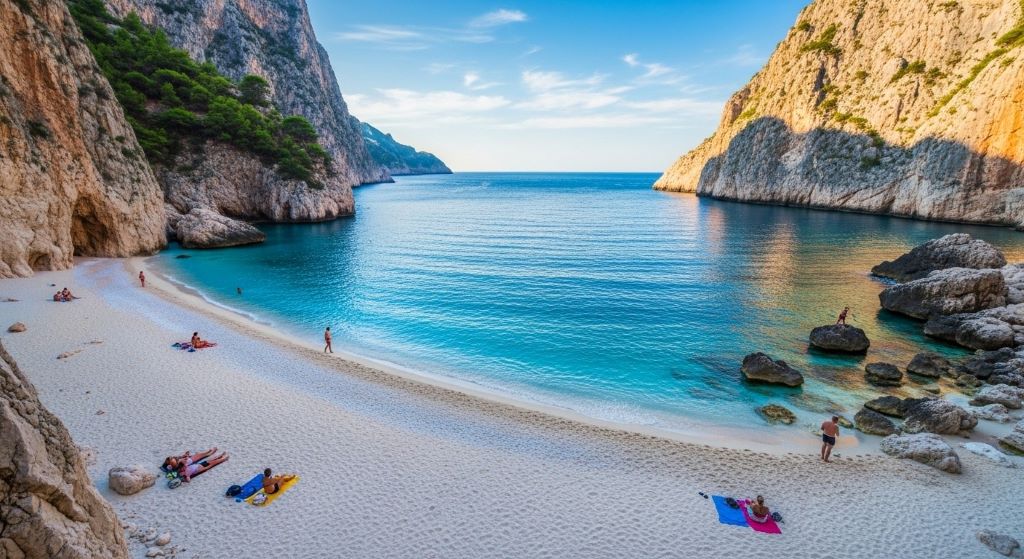
Gjipe Beach requires a 30-minute hike through a dramatic canyon, naturally limiting crowds. Towering cliffs frame turquoise waters perfect for swimming and snorkeling. Additionally, the effort to reach this beach rewards visitors with near-private paradise.
Ksamil offers white-sand beaches and four small islands visible from shore. This resort town remains relatively undiscovered by international tourists. Local seafood restaurants serve fresh catches at remarkably affordable prices.
The mountain village of Dhermi perches on hillsides overlooking the coast below. Stone houses and narrow streets retain traditional Albanian charm. Moreover, nearby beaches provide easy access to both mountain and sea experiences.
Llogara Pass connects coastal areas to inland regions through spectacular mountain scenery. The drive features hairpin turns revealing panoramic Mediterranean views. Therefore, renting a car allows maximum exploration flexibility along this beautiful coastline.
According to The Guardian, Albania’s Riviera remains one of Europe’s last undiscovered coastal treasures with development still respectful of natural beauty.
Azores, Portugal: Atlantic Islands of Volcanic Wonders
The Azores archipelago sits 1,000 miles west of mainland Portugal in the Atlantic Ocean. Nine volcanic islands offer diverse landscapes from crater lakes to hot springs. Tourism remains modest despite increasing international recognition.
Sao Miguel, the largest island, features Sete Cidades crater with twin blue and green lakes. Hiking trails circle the crater rim providing constantly changing perspectives. Additionally, Terra Nostra Park offers botanical gardens with thermal swimming pools.
Pico Island showcases Portugal’s highest mountain rising dramatically from the ocean. Vineyards grow in unique lava rock formations creating UNESCO-protected cultural landscapes. Moreover, whale watching excursions depart regularly from coastal towns.
Flores Island lives up to its name with abundant waterfalls and lush vegetation. Poco da Alagoinha waterfall sits at the bottom of a crater accessible by hiking. The island’s remote location keeps visitor numbers low year-round.
Terceira combines natural beauty with historical significance in Angra do Heroismo. This UNESCO World Heritage city features colorful architecture and volcanic caves. However, most travelers skip Terceira for Sao Miguel, leaving it wonderfully uncrowded.
Madagascar: Biodiversity Hotspot Off Africa’s Coast
Madagascar separated from Africa millions of years ago, creating unique evolution and endemic species. Baobab trees, lemurs, and chameleons exist nowhere else on Earth. Despite incredible natural wealth, tourism infrastructure remains underdeveloped, limiting crowds.
Avenue of the Baobabs near Morondava creates otherworldly landscapes at sunset. Ancient trees tower over dirt roads traveled by ox carts and occasional tourists. Additionally, nearby Kirindy Forest offers night walks spotting rare nocturnal wildlife.
Tsingy de Bemaraha National Park features razor-sharp limestone pinnacles forming surreal rock forests. Suspension bridges and via ferrata routes allow exploration of this UNESCO World Heritage site. Moreover, lemur species inhabit forests within the park boundaries.
Nosy Be island provides tropical beach experiences with turquoise waters and coral reefs. Smaller surrounding islands like Nosy Iranja offer pristine beaches accessible by boat. However, tourism remains modest compared to other Indian Ocean destinations.
Isalo National Park showcases sandstone formations, canyons, and natural swimming pools. Multi-day trekking routes traverse varied terrain from grasslands to forests. The park’s remote location and limited facilities naturally control visitor numbers.
Kyrgyzstan: Central Asian Mountain Paradise
Kyrgyzstan offers dramatic mountain scenery along ancient Silk Road routes. Over 90 percent of the country sits above 1,500 meters elevation. Nomadic culture persists in high mountain pastures where tourism infrastructure remains minimal.
Song-Kol Lake sits at 3,000 meters elevation surrounded by rolling alpine meadows. Nomadic families welcome visitors to traditional yurt stays during summer months. Additionally, horseback riding allows exploration of this vast high-altitude landscape.
Ala-Archa National Park provides easy access to Tian Shan mountain peaks near Bishkek. Day hikes suit various fitness levels, while multi-day treks challenge experienced mountaineers. Moreover, the park entrance fees remain remarkably affordable.
Jeti-Oguz Valley features dramatic red rock formations called Seven Bulls. Hot springs and hiking trails attract domestic tourists but few internationals. Therefore, visitors experience authentic Kyrgyz mountain culture without tourist crowds.
Issyk-Kul Lake, the world’s second-largest alpine lake, never freezes despite its elevation. The northern shore offers beach resorts, while the southern shore remains rural and undeveloped. However, even resort areas see modest crowds compared to similar destinations.
Tasmania, Australia: Wilderness at the World’s Edge
Tasmania sits south of mainland Australia, offering diverse landscapes from beaches to mountains. Nearly half the island enjoys protected status as national parks and reserves. International tourism focuses heavily on mainland Australia, leaving Tasmania relatively peaceful.
Cradle Mountain-Lake St Clair National Park features alpine landscapes and ancient rainforests. The Overland Track provides multi-day wilderness hiking through pristine environments. Additionally, day walks like Dove Lake Circuit offer accessible mountain scenery.
Bay of Fires on the northeast coast showcases white sand beaches and orange-lichened granite boulders. This 30-kilometer stretch remains largely undeveloped with camping the primary accommodation option. Moreover, crystal-clear waters invite swimming and snorkeling.
Freycinet National Park protects the stunning Wineglass Bay frequently ranking among world’s best beaches. The lookout hike takes two hours return, while beach access requires additional descent. However, visitor numbers remain manageable outside Australian school holidays.
Southwest Tasmania contains some of the world’s last temperate wilderness areas. Accessible only by boat or plane, these regions see minimal human impact. Therefore, adventure seekers find true wilderness experiences rare elsewhere.
According to National Geographic, Tasmania offers world-class wilderness experiences without the crowds found in more famous Australian destinations.
Slovenian Alps: Alpine Beauty Without Swiss Prices
Slovenia packs incredible natural diversity into a small European country. The Julian Alps provide dramatic mountain scenery rivaling Switzerland and Austria. However, tourism remains modest, and prices stay significantly lower than neighboring countries.
Lake Bled appears in tourism promotions but maintains manageable crowds outside peak summer. The less-visited Lake Bohinj offers similar beauty with even fewer tourists. Additionally, hiking trails connect these lakes through pristine mountain forests.
Triglav National Park protects Slovenia’s highest peaks and pristine alpine environments. Vrsic Pass provides spectacular mountain driving through 50 hairpin turns. Moreover, the Soca River Valley features emerald-green waters perfect for kayaking and swimming.
Velika Planina, a shepherd settlement high in the Kamnik Alps, maintains traditional herding practices. Wooden huts dot alpine meadows accessible by cable car and hiking. The area sees mostly Slovenian day-trippers rather than international tourists.
Logarska Dolina, a glacial valley, offers hiking trails through untouched mountain landscapes. Rinka Waterfall cascades 90 meters in the valley’s upper reaches. Therefore, this destination provides quintessential alpine experiences without tourist infrastructure overdevelopment.
Oman: Arabian Desert Meets Turquoise Coast
Oman combines dramatic desert landscapes with beautiful coastlines along the Arabian Sea. Tourism development focuses on luxury while maintaining cultural authenticity. Visitor numbers remain low compared to neighboring UAE, preserving peaceful exploration.
Wahiba Sands desert offers classic Arabian dune landscapes stretching to horizons. Bedouin camps provide overnight desert experiences with traditional hospitality. Additionally, sunrise and sunset transform dunes into constantly changing color palettes.
Wadi Shab features turquoise pools reached by hiking through narrow canyons. Swimming through a keyhole passage leads to hidden waterfalls inside caves. However, the adventure required naturally limits crowds to fit travelers.
Jebel Shams, Oman’s highest mountain, showcases the Grand Canyon of Arabia. Dramatic cliffs plunge 1,000 meters creating spectacular viewpoints. Moreover, mountain villages maintain traditional terraced farming and stone architecture.
Salalah’s Dhofar region experiences unique monsoon seasons transforming deserts into green landscapes. Frankincense trees grow in mountain valleys producing the ancient trade commodity. Therefore, Salalah offers experiences unavailable elsewhere in the Arabian Peninsula.
Conclusion
These destinations prove natural beauty and tranquility still exist beyond overtouristed hotspots. From the Faroe Islands’ dramatic cliffs to Madagascar’s unique wildlife, options span every continent. Choosing low-tourism destinations rewards travelers with authentic experiences while supporting sustainable development. Additionally, peaceful environments allow deeper connections with nature and local cultures. Therefore, adventurous travelers should explore these hidden gems before they gain mainstream popularity. The memories created in uncrowded natural paradises often prove more meaningful than visits to famous but congested attractions.
Frequently Asked Questions
What defines a low-tourism destination?
Low-tourism destinations receive significantly fewer international visitors than popular hotspots, maintaining authentic local character and uncrowded attractions. These places typically lack extensive tourism infrastructure, though basic services exist. Annual visitor numbers remain modest relative to population and attraction quality.
Are low-tourism destinations safe for travelers?
Most low-tourism destinations offer excellent safety for visitors, often safer than overcrowded tourist areas. However, travelers should research specific locations, follow local advice, and maintain standard travel precautions. Limited tourism infrastructure sometimes requires more self-reliance and planning.
How can I find accommodations in places with low tourism?
Search international booking platforms like Booking.com and Airbnb for available options. Contact local tourism boards for guesthouse recommendations. Additionally, arriving without reservations during off-peak seasons often works in truly low-tourism destinations with flexible accommodation availability.
Will language barriers pose problems in low-tourism areas?
Language challenges increase in less-visited destinations where English proficiency may be limited. However, translation apps, basic phrase learning, and gesture communication usually suffice. Moreover, locals often appreciate efforts to speak their language, enhancing cultural exchanges.
When is the best time to visit low-tourism destinations?
Shoulder seasons typically offer the best combination of good weather and minimal crowds. Research specific destination climate patterns before booking. Additionally, avoiding school holidays and major festivals helps ensure peaceful experiences even in moderately popular locations.
Related Topics:
Explore Tibet: Travel Planning, Cultural Insights And Tour Guide
Best Time to Visit Belarus and Things to Do: A Seasonal Guide to an Undiscovered Gem